TL;DR: They tell you it is about tech. It is not. It is about your org chart.
Monolith vs microservices is a management and culture choice. Microservices were built to segment management bottlenecks in big companies. You get performance too, but the real payoff only shows up once you have many teams.
Monolithic architecture
Picture a house where everything, plumbing to electricity, is connected and lives under one roof. A monolith works the same way: one codebase, one deploy.
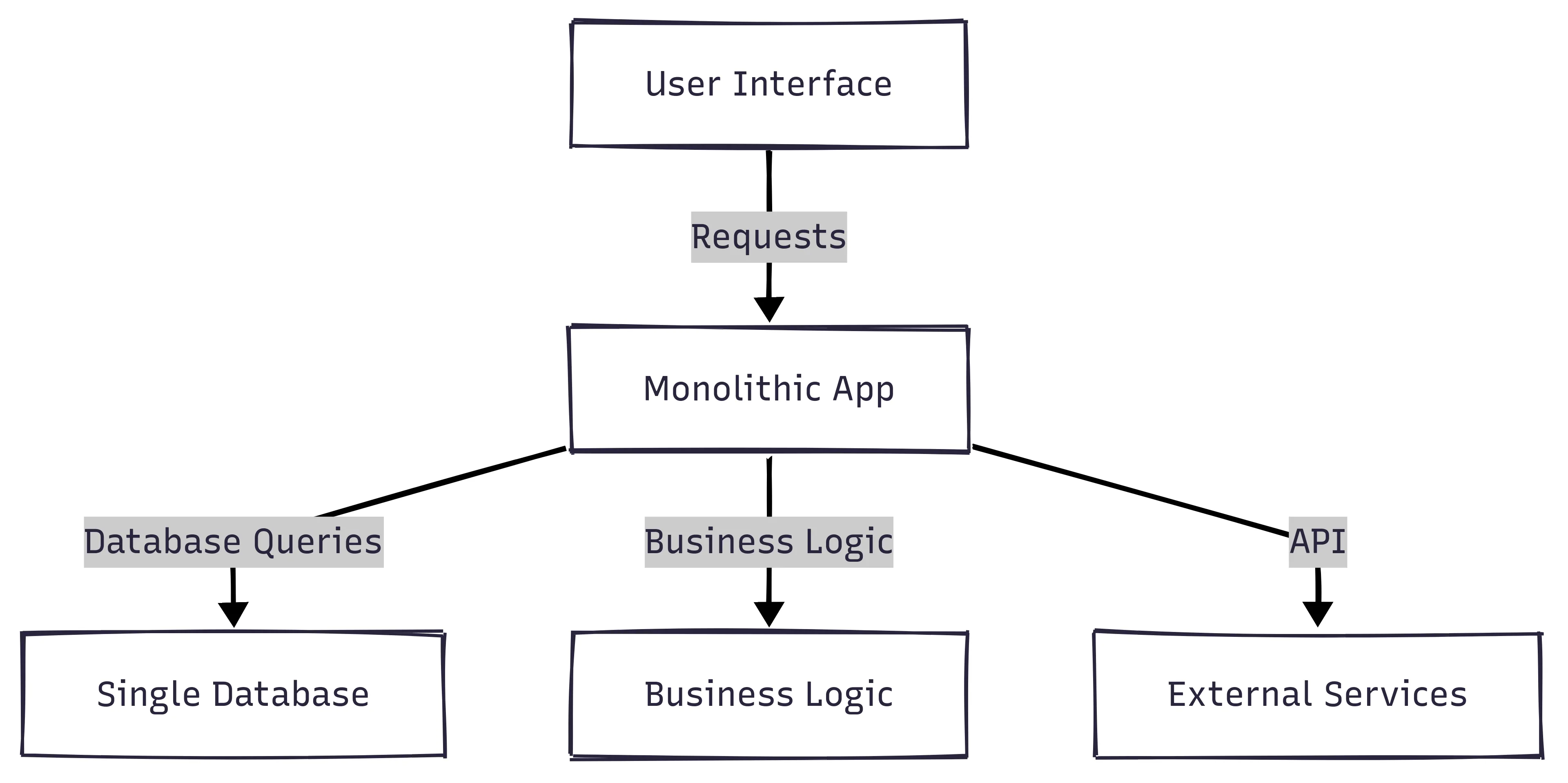
Why teams pick it:
- Simple to build and deploy. Everything is in one place, so shipping is straightforward.
- Easy for a small team to hold in their heads. One unified structure, less to coordinate.
- Lower upfront cost. Less to set up and run, which is ideal for startups.
If your dev team will stay around three to six people for the next few years, a monolith is probably your best move.
Microservices architecture
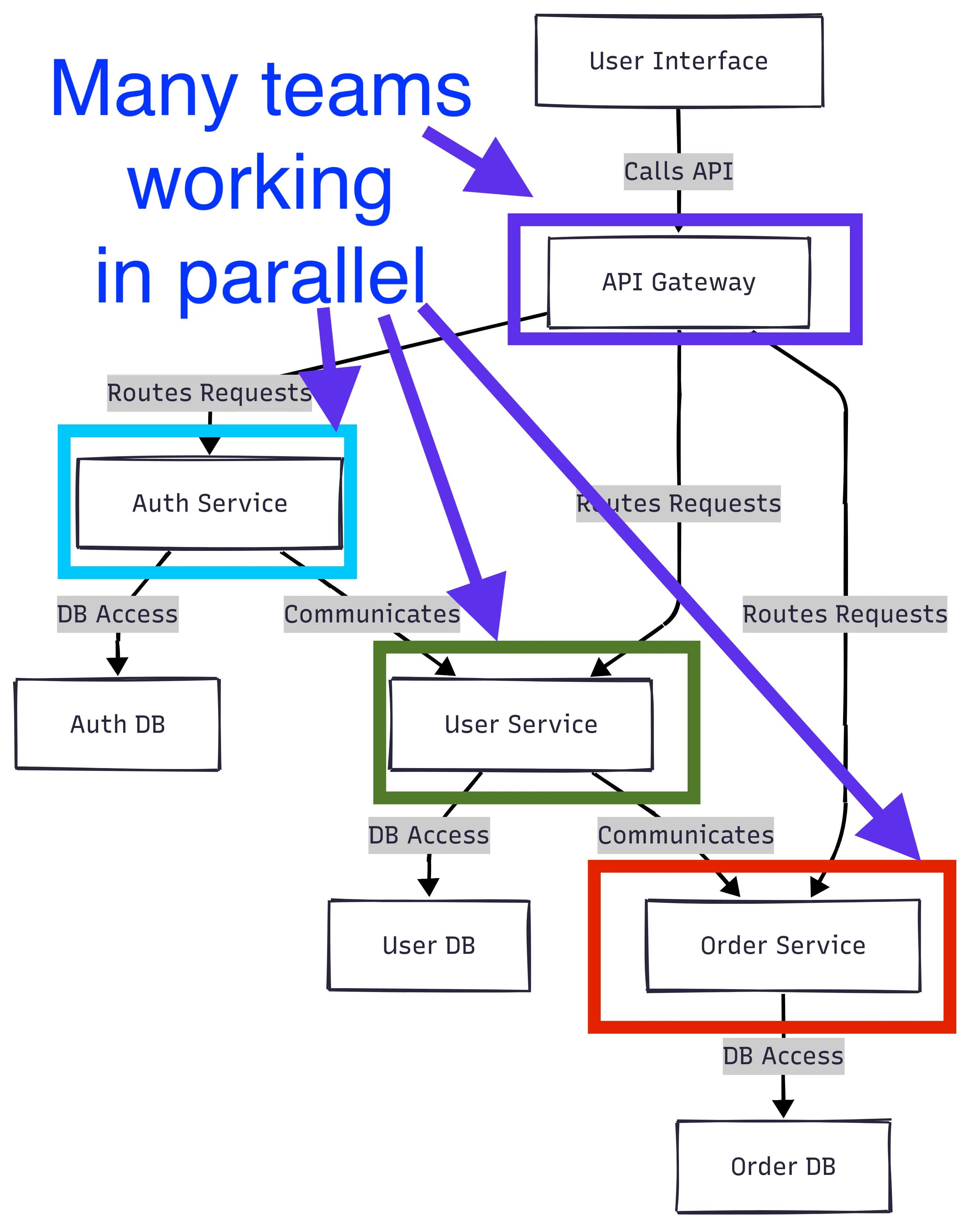
Microservices split the app into small, loosely coupled services, each owning one business function and running on its own.

Engineers say it is for performance. Really it is for letting many teams work independently without tripping over each other, and cutting the cost of approvals and coordination.
(Hosting platforms love the trend, since it is a great excuse to repackage servers under new names and sell you more of them.)
What you get:
- Targeted scaling. Scale one part without touching the rest.
- Per-service optimization. Each service can use the database and tuning that fit it.
- Independent deploys and fault isolation. One service failing does not have to take down the whole app.
It is really about Conway’s Law
Conway’s Law says your software ends up shaped like your org’s communication structure.
Distributed systems exist because past a certain scale you have to grow the team, and more people means more communication overhead. Left unbudgeted, that becomes chaos. Microservices draw hard boundaries that break the cycle.
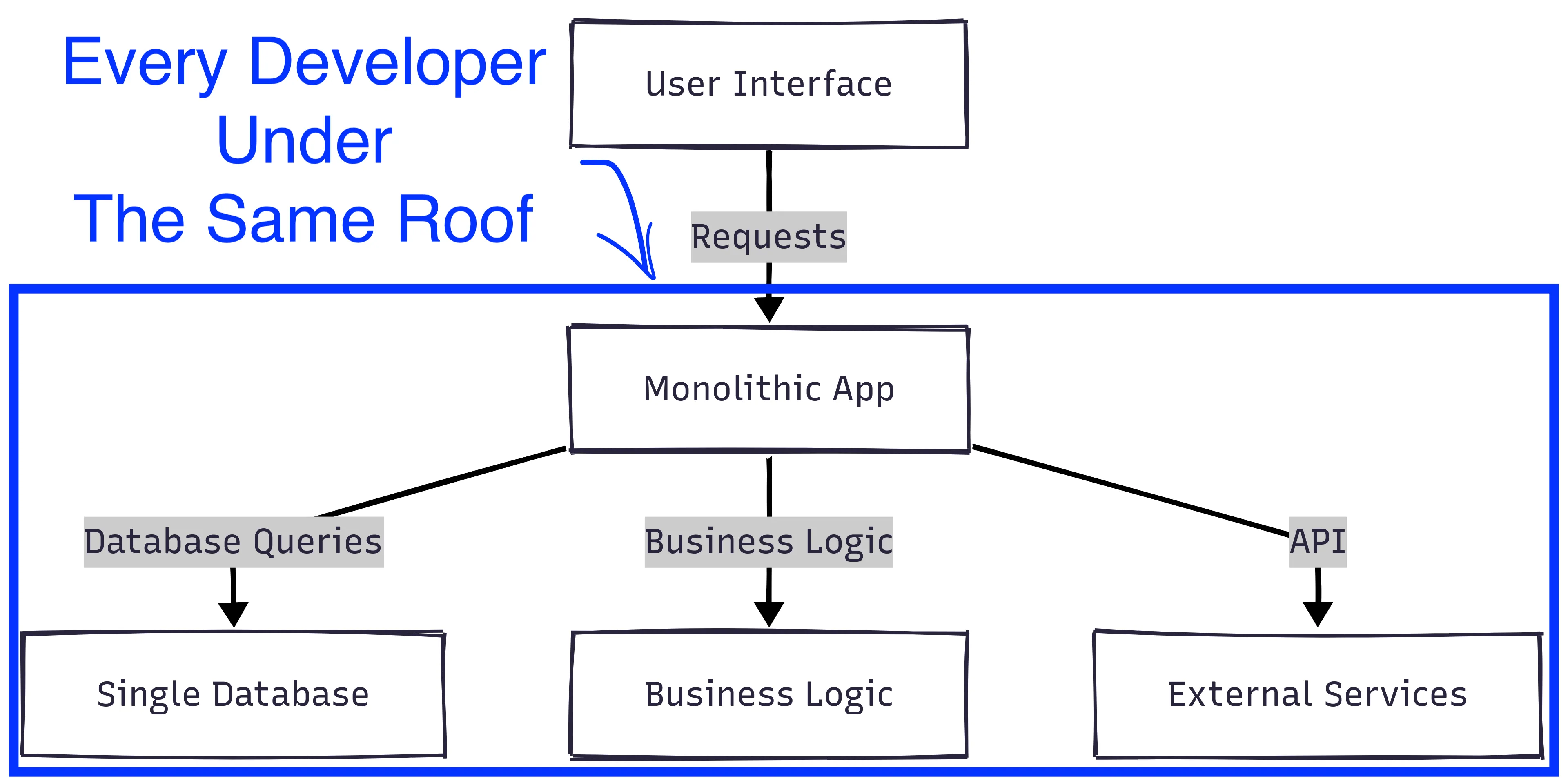
Monolith: better for a smaller, collaborative team.
Microservices: better for a larger org with multiple autonomous units.
The golden question
It is not just technical. It is operational and cultural. So ask yourself one thing:
Can you still feed your whole engineering team with one New York pizza at lunch?
If yes, go monolithic. Performance you can always improve. Culture is much harder to fix.
When microservices kick you back
Say you work on Service B. It reads from A, D, G, P, and K, and four other services depend on it.

You are on-call. There is a bug. A call to P fails because G is failing. Now four angry teams are at your desk, but you cannot fix G, it is not yours. Half of Team G is on holiday, and you are stuck reading code you have never seen.
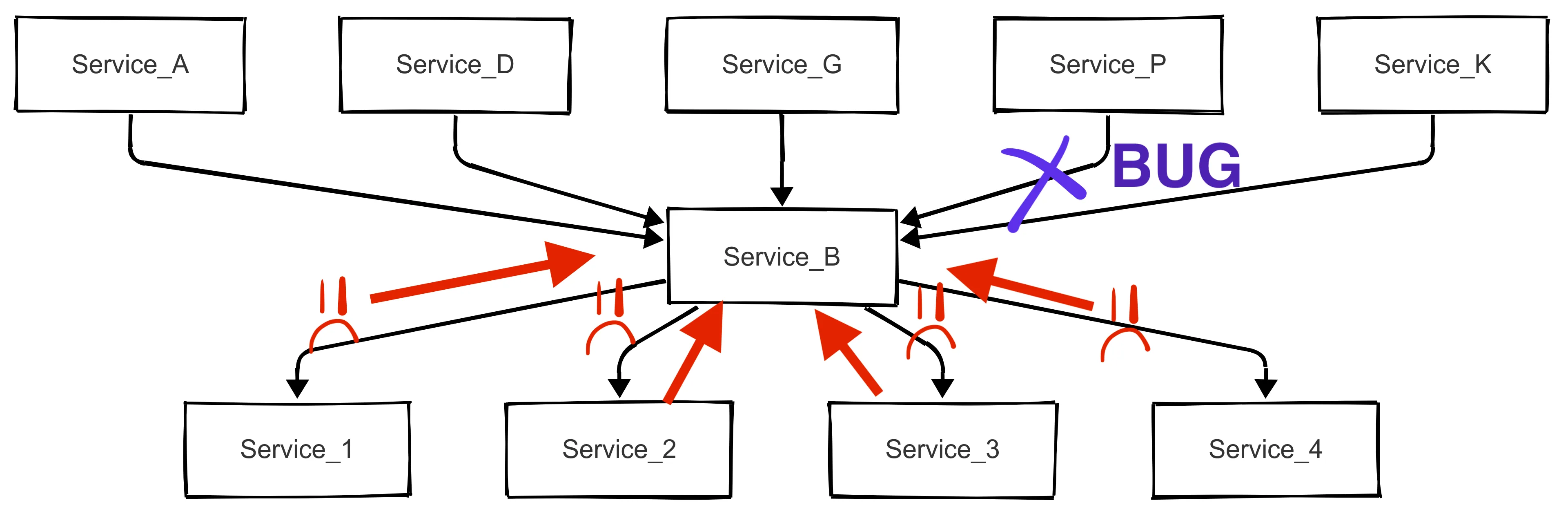
Imagine fixing your favorite restaurant’s oven just because you are hungry. That is the kind of mess microservices create when the org is not ready for them.
So which one
If you are reading this to figure out the difference, odds are you are starting something. Start with the monolith.
Send me an email to talk through your project. Sometimes you just need to hand part of the logic to a provider and keep the rest simple.
Every great product starts from a great conversation, and a simple MVP should not take half a year or put you in debt.